

Kurupt FM
- morethanjustmusicu
- May 12
- 6 min read

From the Tower Block to The Top
How a fictional pirate radio station from Brentford became
one of the most important cultural forces in British
comedy, music, and working-class representation.
MORETHANJUSTMUSIC · LONG READ
There is something quietly radical about Kurupt FM. On the
surface, it is a joke a mockumentary about a group of deluded,
small-time DJs and MCs running an illegal pirate radio station out
of a tower block flat in Brentford, West London. But peel back the
laughter, and what you find underneath is something genuinely
important: a love letter to a community that mainstream Britain
had long ignored, and a cultural contribution that will outlast many
of its more celebrated contemporaries.
This is the story of how Kurupt FM came up — and why, for all its
comedy, it has done more for British culture and society than
most people give it credit for.
The Beginning Born from Real Culture The Beginning Born from Real Culture The Beginning Born from Real Culture
Kurupt FM did not begin in a writer's room. It began, like all the
best British things, among friends. Allan Mustafa, Steve Stamp,
Asim Chaudhry, and Hugo Chegwin the men behind MC
Grindah, Steves, Chabuddy G, and DJ Beats were genuinely
steeped in the UK garage and pirate radio scene of the early
2000s. They weren't outsiders looking in; they were the culture
looking at itself.
Starting as improvised YouTube sketches in 2010 under the
name "Wasteman TV," the earliest videos were rough, low-budget,
and completely authentic. The characters were drawn from real
life real attitudes, real slang, real dynamics from the tower
blocks and estates of West London. The humour was never mean-
spirited. It was the humour of recognition, of a community finally
seeing itself on screen.
"The whole show has always been loved for its authenticity, celebrating a uniquely British musical subculture being written and acted by people who grew up as part of
that subculture."
The YouTube clips caught on slowly 5,000 views felt like a big
deal at the time. Then the BBC came calling. A pilot episode aired
in 2012 and became the most-shared video on iPlayer that month.
The world was beginning to pay attention.
Representing the Unrepresented Representing the Unrepresented Representing the Unrepresented
One of the most significant things Kurupt FM ever did was simply
exist. British television in the early 2010s was still largely
dominated by voices from middle-class backgrounds. The estates,
the council flats, the garage raves, the pirate frequencies
broadcasting from rooftops at 2am these stories were not
being told.
People Just Do Nothing, the BBC Three series that brought Kurupt
FM to national television from 2014 to 2018, changed that. It
centred the lives, the dreams, and yes, the delusions of working-
class West Londoners — and it did so with warmth and dignity.
The characters were flawed and funny, but they were never
objects of mockery. They were fully human: loyal to each other,
passionate about their craft, and desperately trying to make
something of themselves against all odds.
For a generation of young people from similar backgrounds,
seeing Grindah, Beats, Chabuddy, and Steves on a BBC channel
wasn't just entertaining it was validating. It said: your world
matters. Your culture matters. Your story is worth telling.
5
SERIES ON THE
BBC
BAFTA
BEST SCRIPTED
COMEDY 2017
8.5
IMDB RATING
FROM 8,800+
USERS
20K
ARENA TOUR TICKETS SOLD IN 15 MINUTES
Preserving UK Garage for a New Generation
UK garage is one of Britain's great musical exports — a genre born
in the late 1990s from a fusion of house, R&B, and jungle, forged in
the sweaty basements and pirate broadcasts of London. At its
peak, it was the sound of a generation. But by the mid-2000s, it
had been largely sidelined by grime, and the mainstream had
moved on.
Kurupt FM brought it back. Through the show's soundtrack, its live
performances, and especially through The Lost Tape — a real
album released on XL Recordings in 2017, featuring classic UK
garage productions alongside the Kurupt crew — an entirely new
audience discovered the music for the first time. Tracks by Scott
Garcia, DJ Zinc, and Sunship reached listeners who had never
heard of them, and legends of the scene were given a new
platform.
The album was crafted with genuine care and respect. The team
consulted real garage legends and made sure everything they did
honoured the culture they loved. As Steve Stamp put it, it was
always about "doing it for the culture that we respected and
loved so much." When Craig David — himself an iconic figure from
the UKG era — collaborated with the crew on the single
"Summertime," it felt like a full-circle moment for a genre finally
getting its flowers.
A BAFTA Win That Shocked the Industry
In 2017, People Just Do Nothing won the BAFTA for Best Scripted
Comedy — beating Phoebe Waller-Bridge's Fleabag, which was the
heavy favourite. The room was stunned. For many in the industry,
it was inconceivable that a show about garage DJs from a tower
block could beat the darling of the liberal arts comedy world.
But it made perfect sense to anyone who had actually watched it.
People Just Do Nothing was not just funny — it was
extraordinarily well-crafted. The writing was sharp, the performances were nuanced, and the serialised storytelling of its later seasons gave the characters real emotional arcs. The BAFTA win was not a fluke; it was a statement that British comedy was
bigger and more diverse than its gatekeepers had previously
allowed.
Asim Chaudhry, who played Chabuddy G, went on to receive two
BAFTA nominations of his own and a Royal Television Society
Award for Best Comedy Performance — recognition that
cemented his place as one of Britain's finest comic performers,
bringing a South Asian Muslim perspective to British comedy in a
way that had rarely been seen on mainstream television.
Opening Doors for a New Wave of Talent
The success of Kurupt FM did not happen in a vacuum, and it did not stay in a vacuum either. By proving that authentic, working-class, multicultural British stories could reach the top of the industry, they opened doors for others. Their journey — from
bedroom YouTube videos to BAFTA winners to arena tours became a blueprint.
Their approach to creative collaboration also left a mark. Working
with artists like XL Recordings, photographer Vicky Grout,
illustrator Reuben Dangoor (who exhibited at Tate Britain), and
graphic designer Mason London, the Kurupt FM universe became
a genuine creative ecosystem — one that elevated the careers of
numerous artists across music, design, photography, and film.
"It was always about making sure that
everything we did, we were doing for the
culture that we respected and loved so
much."
The Bigger Picture - Community, Identity
and Joy. Pirate radio, the world that Kurupt FM was built upon, was never
just about music. As the history of UK pirate broadcasting shows,
stations broadcasting from tower blocks gave communities on the
margins a voice, a sense of identity, and a feeling of belonging. For
kids who weren't accepted elsewhere, the pirate frequency was a
home.
Kurupt FM understood that. The show captured the camaraderie
of people who had nothing much except each other and their
passion — and it treated that as something worth celebrating, not
something to be ashamed of. In doing so, it told a truth about
working-class British life that too rarely makes it to screen: that
dignity, creativity, and community do not require wealth or
status to flourish.
The fact that the show addressed gentrification with storylines
about the crew's neighbourhood changing around them — shows
just how tuned in the creators were to the real pressures facing
their community. It was comedy, yes. But it was a comedy with a
conscience.
The Legacy — Still Transmitting
Kurupt FM may have gone off the fictional air, but their signal has
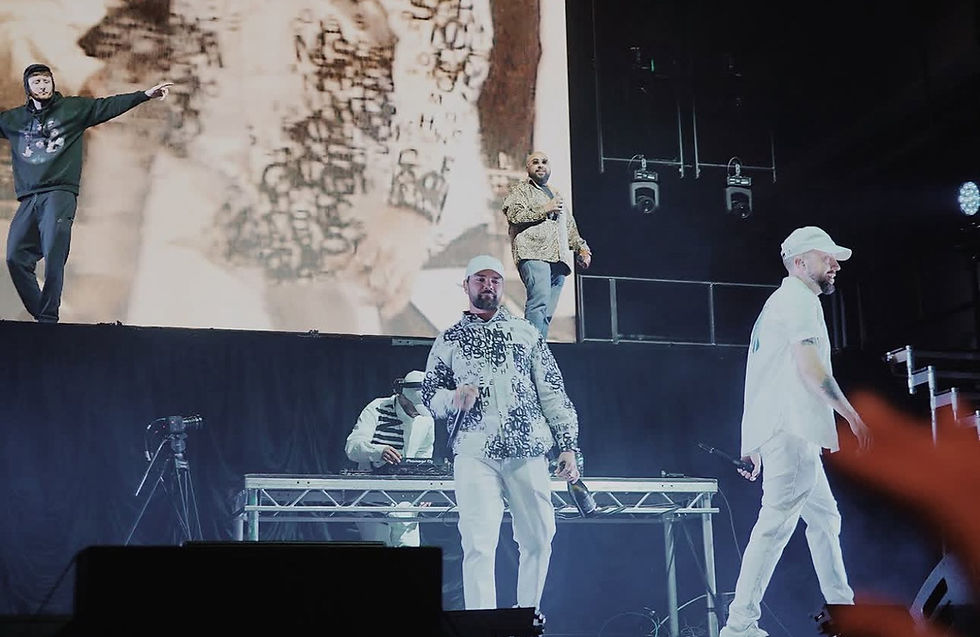
never stopped. The crew sold out a 20,000-ticket arena tour in
fifteen minutes. Their 2021 film, People Just Do Nothing: Big in
Japan, brought the characters to the big screen and introduced
them to international audiences. The Kurupt FM Audio Show
podcast keeps the characters alive. "Chabuddy G" has entered the
British cultural lexicon in a way that very few fictional characters
ever do.
More than that, the cast members have gone on to build serious
careers in British film and television — proving beyond any doubt
that what started as a YouTube sketch among friends was always
powered by genuine, extraordinary talent.
From a Brentford tower block to Brixton Academy. From 5,000
YouTube views to a BAFTA on the mantelpiece. From a frequency
that barely reached four miles to a cultural signal felt across an
entire nation.
That is the story of Kurupt FM. And it is, unquestionably, more
than just music.
© MORETHANJUSTMUSIC


Comments